
flex PCB suppliers address production delays
Modern electronics manufacturers are faced with contradictory requirements: their products must be light in weight but durable enough to survive vibration, heat, moving parts, and repeated flexing. Additionally, they must be affordable to manufacture and meet short product lifecycles. This demanding environment makes it crucial that circuit integration is simple, accurate, and repeatable. Flexible printed circuit boards (PCBs) meet these needs by enabling thinner, lighter, more reliable, and more adaptable electronic devices.
flex pcb supplier offer a number of advantages over rigid PCBs, including their ability to accommodate non-standard shapes and sizes. They can also bend and flex, and they can replace traditional connectors and cables that add weight, cost, and complexity. As a result, many customers see a 75% reduction in weight after switching to a flex PCB design.
PCBs are manufactured from a laminated copper layer, and a thin insulator called polyimide covers them. Conductive material traces are etched into both the top and bottom of the insulator, and they can be made as thick or as thin as required by the device’s design. After etching, the layers are laminated together with a coverlay to protect them from moisture, dust, and damage.
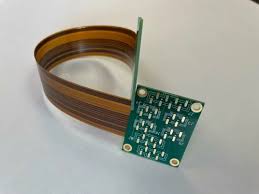
How do flex PCB suppliers address production delays?
The ability of a flex PCB to withstand repeated bending and stretching is directly related to its thickness. Thicker flex PCBs are less flexible, and thinner flex PCBs are more flexible. To ensure that a flex circuit will not become damaged or short out after repeated bending, it is important to consider the thickness of the copper layer and the substrate during design.
Another important consideration when choosing a flex circuit manufacturer is their manufacturing capabilities and expertise. The most capable manufacturers are equipped to handle complex, high-quality, and demanding production runs. They are also able to deliver fast turnarounds, so that you can get your product to market quickly.
One key to minimizing production delays is choosing a flex PCB manufacturer with the capacity and quality to match your exact specifications. The most capable flex manufacturers are able to provide a range of options for your project, including different finishes, thicknesses, and colors. They can also offer a wide range of conductive materials to meet your specific needs.
Flex PCBs can be modified to add flexibility by adding stiffeners to selected areas of the board. This provides additional mechanical stability and prevents solder joints from being damaged when the PCB is bent. Stiffeners can be added in a variety of ways, such as by using rounded edges or by adding metal to the PCB. PCBWay has a detailed calculator to help you determine how much the addition of stiffeners will affect the cost of your flex circuit.
Another way to minimize the risk of production delays is by working with a flexible pcb supplier that offers quick-turn prototypes and low-to-mid-volume production runs. This will allow you to test your design in the real world before sending it to the factory for mass production. This will reduce the chance of errors during the production process and help you avoid costly delays.


